





Experience
Seasoned asset managers with a passion for uplifting others through real estate investing opportunities.
LEARN MORE

Education
Build confidence in your ability to invest wisely with the free educational resources

Connection
Stay informed and up to date with the latest investment opportunities and company developments
About us
Christopher Linger and Maricela Soberanes are principals at Up Plex Capital LLC. Accredited Real estate investors. Having built a personal portfolio valued at over $100M, they’ve created significant passive income for themselves and their investors by finding the best properties today’s market can offer. Maricela has a business degree and a successful medical service business since 2015. Chris has an MBA, twenty-seven years of active duty Navy services (ret), now full-time apartment syndicator.
Experience
Seasoned asset managers with a passion for uplifting others through real estate investing opportunities.
Education
Build confidence in your ability to invest wisely with the free educational resources
Connection
Stay informed and up to date with the latest investment opportunities and company developments
Be the First to Know
Receive exclusive investment opportunities, and the latest investing strategies ...right to your inbox.
About Chris and Maricela
Christopher Linger and Maricela Soberanes are principals at Up Plex Capital LLC. Accredited Real estate investors. Having built a personal portfolio valued at over $100M, they’ve created significant passive income for themselves and their investors by finding the best properties today’s market can offer. Maricela has a business degree and a successful medical service business since 2015. Chris has an MBA, twenty-seven years of active-duty Navy services (ret), now full-time apartment syndicator.
Be the First to Know
Receive exclusive investment opportunities, and the latest investing strategies ...right to your inbox.
Hear From Our Investors
My wife and I thank our lucky stars that we worked with Chris and Maricela, they are so organized and always willing to make a win-win situation.
- S. McDonald -
McDonald Homes
I’ve said it before, I’ll say it 100 times. We
owe our success to you both. Great mentors like you [Chris & Maricela] have
helped tremendously!
- S. Enyard -
Anchor Atlas Properties Founder
After seeing and relating to some of my frustrations, they drove two hours to help
with our four-plex renovation. Chris & Maricela are always a wealth of knowledge.
- C. Byler -
Passive Patriots Founder
Low Operational Costs
Facilities require minimal maintenance and management compared to other real estate.
High Profit Margins
Steady cash flow with low overhead leads to strong returns.


Value-Add Opportunities
Simple upgrades like security or climate control can boost income and property value.
Scalability
Easily expand by adding units or acquiring new facilities.


3 Investing Tips

Start Now
The best time to invest in real estate is now and with the right investment, you can see amazing growth in just 18 months.

Trust in Proven Returns
The best time to invest in real estate is now and with the right investment, you can see amazing growth in just 18 months.

Start Just With $50K
It takes less than you think to get started and with the right team you'll shorten your learning curve and increase your returns.
3 Investing Tips
Start Now
The best time to invest in real estate is now and with the right investment, you can see amazing growth in just 18 months.
Trust in Proven Returns
The best time to invest in real estate is now and with the right investment, you can see amazing growth in just 18 months.
Start Just With $50K
It takes less than you think to get started and with the right team you'll shorten your learning curve and increase your returns.
Schedule A Free Consultation
Invest with confidence. We’ll help you understand how to evaluate if a certain asset is right for you.
Schedule A Free Consultation
Invest with confidence. We’ll help you understand how to evaluate if a certain asset is right for you.
Our Assets
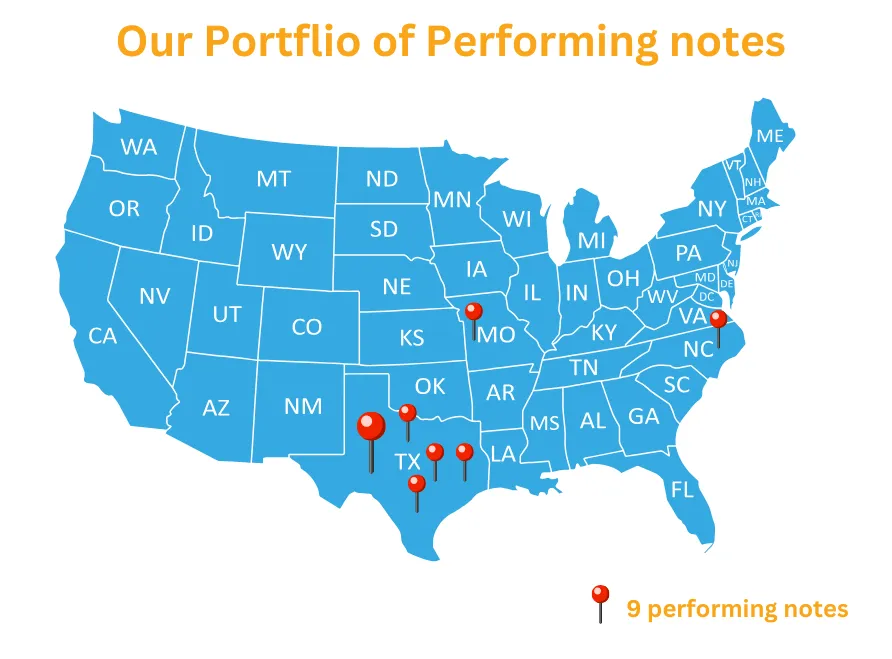
We strategically focus on a variety of asset types in order to create a strong and diverse portfolio of assets that can hedge against economic uncertainties. Creating safer investment opportunities for our investors.
Our Assets
We strategically focus on a variety of asset types in order to create a strong and diverse portfolio of assets that can hedge against economic uncertainties. Creating safer investment opportunities for our investors.
FREE Educational
Materials
Learn important investing concepts and strategies at your own pace with our "Savvy Passive Investor" series on YouTube
FREE Educational Materials
Learn important investing concepts and strategies at your own pace with our "Savvy Passive Investor" series on YouTube
Latest News
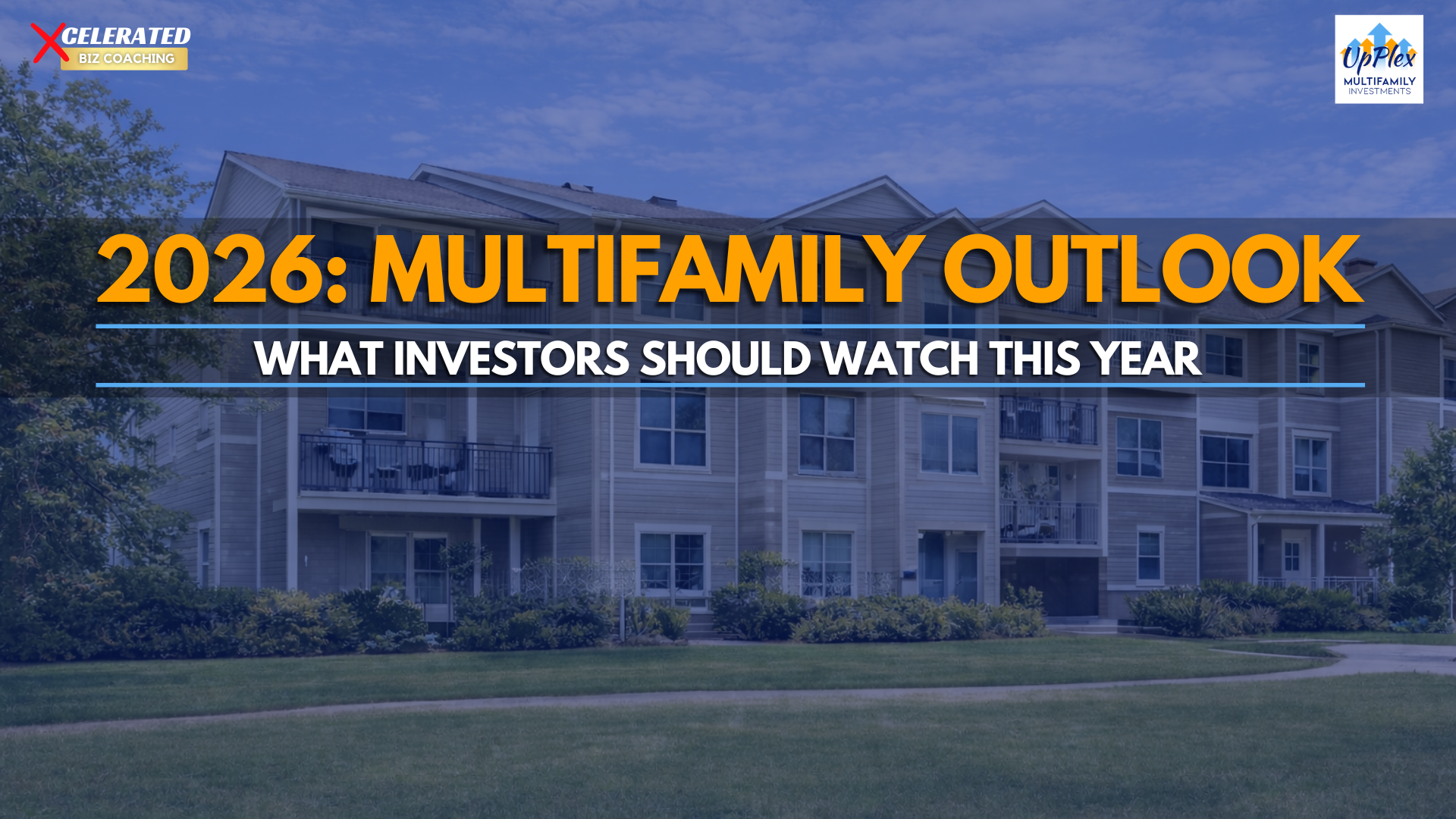
2026 Multifamily Outlook: What Investors Should Watch This Year
If the past few years have taught real estate investors anything, it’s this: The market doesn’t stay the same for long. Interest rates moved quickly. Property values adjusted. Some investors paused. Others leaned in. And now, as we move through 2026, many are asking the same question:
What should I actually be paying attention to this year — especially in multifamily? The good news is this: the fundamentals haven’t changed. What has changed is the strategy required to succeed.
Multifamily Demand Is Still the Foundation
Multifamily continues to be one of the strongest long-term asset classes because housing isn’t optional. People will always need a place to live.
Even with higher borrowing costs and affordability challenges, rental demand remains steady in many markets. In fact, as homeownership becomes more expensive, renting often becomes the practical choice for millions of households.
That dynamic continues to support apartment communities across workforce, Class B, and well-located Class A properties.
In 2026, multifamily remains a core focus because the demand side of the equation is still strong.
Pricing Has Reset — And That Matters
A few years ago, multifamily pricing was extremely aggressive. Deals traded quickly, and underwriting often relied on rapid rent growth.
Today, the environment feels more disciplined. Cap rates have adjusted. Sellers are more realistic. Lenders are more cautious. And investors are focused on cash flow fundamentals instead of speculation.
For long-term investors, that’s not a negative shift — it’s a healthier one. Balanced markets often create better entry points than overheated ones.
Operations Will Separate Winners From the Rest
In 2026, multifamily investing is less about riding market momentum and more about strong execution.
That means:
Careful expense management
Strategic renovations
Maintaining occupancy
Delivering strong tenant experiences
Protecting and growing Net Operating Income
The difference between an average deal and a strong-performing asset often comes down to operations.
For passive investors, this makes one factor especially important: choosing the right operator.
Supply and Migration Trends Still Matter
Not all markets are created equal. In 2026, investors should pay attention to areas experiencing:
Job growth
Population inflow
Limited new construction relative to demand
Some markets are absorbing new supply smoothly. Others may feel short-term pressure from recent development cycles.
Understanding local fundamentals — not just national headlines — is critical in multifamily investing this year.
Passive Multifamily Investing Continues to Grow
Many investors want exposure to apartments without managing tenants or handling day-to-day operations.
That’s where multifamily partnerships and funds come in.
These structures allow investors to participate in professionally managed apartment communities while benefiting from:
Potential cash flow
Long-term appreciation
Tax advantages through depreciation
Diversification across properties
For beginners, passive multifamily investing can be one of the most accessible ways to enter the space.
What Should Investors Watch in 2026?
Instead of getting caught up in headlines, focus on the fundamentals:
Is rental demand holding steady?
Are properties cash-flowing conservatively?
Is new supply manageable in your target market?
Is the operator experienced in navigating shifting cycles?
Multifamily has always rewarded investors who think long-term.
Final Thoughts: Strategy Over Speculation
2026 isn’t about chasing the perfect timing. It’s about positioning wisely.
Real estate cycles come and go, but housing demand remains. Apartments continue to play a vital role in communities across the country.
At Up Plex, we remain focused on multifamily investments built on strong fundamentals, disciplined underwriting, and experienced management.
Opportunity doesn’t disappear in shifting markets — it evolves.
And investors who stay focused on fundamentals are the ones who benefit.
Ready to Invest in Multifamily in 2026?
If you’re interested in learning more about investing in multifamily real estate through strategic partnerships or funds, Up Plex is here to help. Let’s start the conversation, contact us now!
LEAVE A REPLY

Check Out Our Latest BLOG Post
2026 Multifamily Outlook: What Investors Should Watch This Year
If the past few years have taught real estate investors anything, it’s this: The market doesn’t stay the same for long. Interest rates moved quickly. Property values adjusted. Some investors paused. Others leaned in. And now, as we move through 2026, many are asking the same question:
What should I actually be paying attention to this year — especially in multifamily? The good news is this: the fundamentals haven’t changed. What has changed is the strategy required to succeed.
Multifamily Demand Is Still the Foundation
Multifamily continues to be one of the strongest long-term asset classes because housing isn’t optional. People will always need a place to live.
Even with higher borrowing costs and affordability challenges, rental demand remains steady in many markets. In fact, as homeownership becomes more expensive, renting often becomes the practical choice for millions of households.
That dynamic continues to support apartment communities across workforce, Class B, and well-located Class A properties.
In 2026, multifamily remains a core focus because the demand side of the equation is still strong.
Pricing Has Reset — And That Matters
A few years ago, multifamily pricing was extremely aggressive. Deals traded quickly, and underwriting often relied on rapid rent growth.
Today, the environment feels more disciplined. Cap rates have adjusted. Sellers are more realistic. Lenders are more cautious. And investors are focused on cash flow fundamentals instead of speculation.
For long-term investors, that’s not a negative shift — it’s a healthier one. Balanced markets often create better entry points than overheated ones.
Operations Will Separate Winners From the Rest
In 2026, multifamily investing is less about riding market momentum and more about strong execution.
That means:
Careful expense management
Strategic renovations
Maintaining occupancy
Delivering strong tenant experiences
Protecting and growing Net Operating Income
The difference between an average deal and a strong-performing asset often comes down to operations.
For passive investors, this makes one factor especially important: choosing the right operator.
Supply and Migration Trends Still Matter
Not all markets are created equal. In 2026, investors should pay attention to areas experiencing:
Job growth
Population inflow
Limited new construction relative to demand
Some markets are absorbing new supply smoothly. Others may feel short-term pressure from recent development cycles.
Understanding local fundamentals — not just national headlines — is critical in multifamily investing this year.
Passive Multifamily Investing Continues to Grow
Many investors want exposure to apartments without managing tenants or handling day-to-day operations.
That’s where multifamily partnerships and funds come in.
These structures allow investors to participate in professionally managed apartment communities while benefiting from:
Potential cash flow
Long-term appreciation
Tax advantages through depreciation
Diversification across properties
For beginners, passive multifamily investing can be one of the most accessible ways to enter the space.
What Should Investors Watch in 2026?
Instead of getting caught up in headlines, focus on the fundamentals:
Is rental demand holding steady?
Are properties cash-flowing conservatively?
Is new supply manageable in your target market?
Is the operator experienced in navigating shifting cycles?
Multifamily has always rewarded investors who think long-term.
Final Thoughts: Strategy Over Speculation
2026 isn’t about chasing the perfect timing. It’s about positioning wisely.
Real estate cycles come and go, but housing demand remains. Apartments continue to play a vital role in communities across the country.
At Up Plex, we remain focused on multifamily investments built on strong fundamentals, disciplined underwriting, and experienced management.
Opportunity doesn’t disappear in shifting markets — it evolves.
And investors who stay focused on fundamentals are the ones who benefit.
Ready to Invest in Multifamily in 2026?
If you’re interested in learning more about investing in multifamily real estate through strategic partnerships or funds, Up Plex is here to help. Let’s start the conversation, contact us now!
LEAVE A REPLY